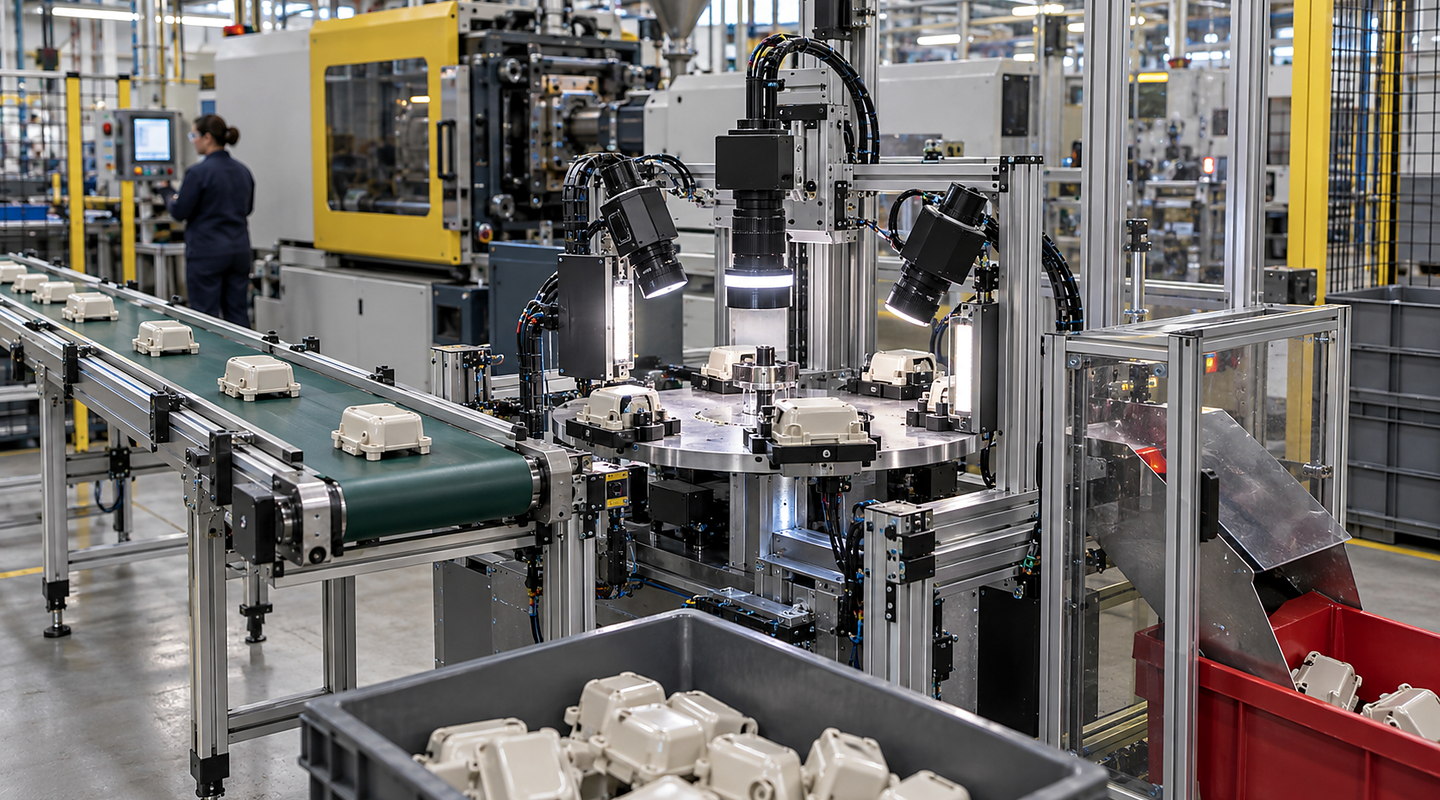
Define the colour or variant decision that matters to your production. Compare correct, incorrect and marginal examples under representative presentation and lighting so acceptable variation is separated from the condition that must be rejected.
Speak directly with Oxford Vision Systems about colour and variant verification.
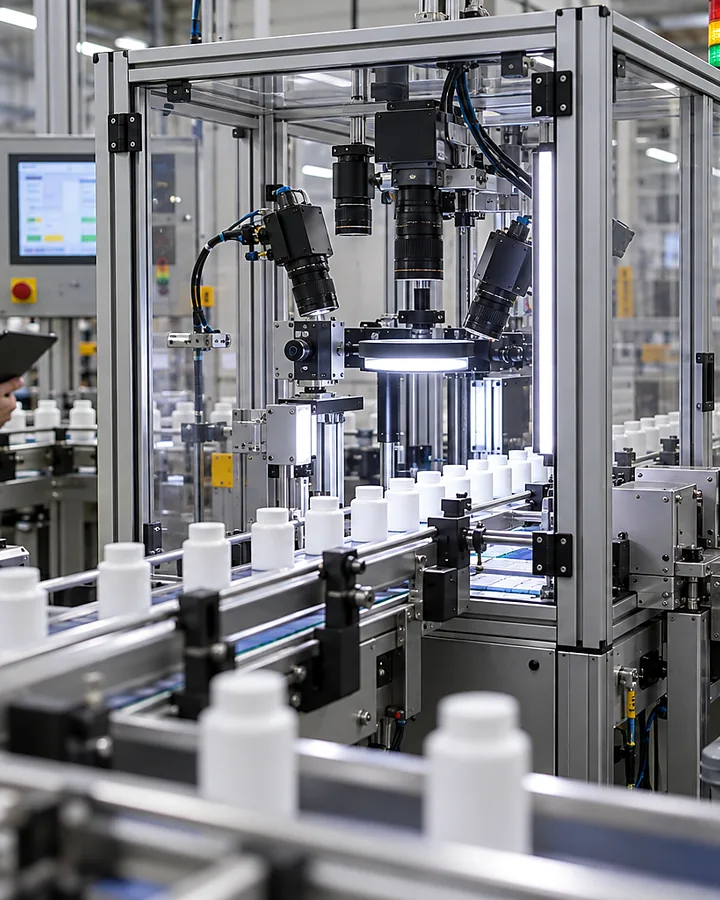
Photographs illustrate general machine-vision inspection. Colour and variant decisions must be assessed using representative products, agreed reference samples and the intended lighting and presentation.
Quick answer
How do we verify product colour despite lighting and material variation?
Agree acceptable and unacceptable colour examples before choosing the camera and lighting. Include normal changes in finish, background and product position in the sample set. The trial should show how the decision behaves at the acceptance boundary, with a defined process for approving reference samples and recipe changes.
Six useful questions
Describe what you need from colour and variant verification before choosing a solution
For in-line inspection using colour and variant verification, share the normal condition, realistic range and difficult cases the finished system must handle.
Question 1
Visible Defect or Measurement Definition for Colour & Variant Verification
Identify the colour or variant decision the line must make. Supply approved acceptable and unacceptable examples, define the acceptance boundary, and agree who may approve reference samples and recipe changes.
Question 2
Good, Bad and Marginal Sample Range
Include good, bad and marginal examples, not just one nominal sample. Record normal finish, batch, supplier and product variation, including credible extremes that could move the decision towards its acceptance boundary.
Question 3
Part Presentation and Production Speed
Describe the actual product position and production-speed range. Use representative presentation and timing in the optical trial, then confirm that each result remains associated with the correct part on the line.
Question 4
Optics, Lighting and Environmental Conditions
Include the intended lighting, background, finish and environmental variation in the trial. Demonstrate that acceptable product variation remains distinguishable from the colour or variant condition that must be rejected.
Question 5
Recipe, Reject and Line-Control Interfaces
Link each inspection result to the correct part and recipe. Agree the reject or line-control response to an incorrect, uncertain or missing result, including recipe changes, fault indication and controlled recovery.
Question 6
False-Accept, False-Reject and Challenge Criteria
Agree the method, repetitions, acceptance limits and result record before testing. Challenge good, bad and marginal cases under the intended conditions, record false accepts and false rejects, and define how later changes will be controlled.
Applications
Two useful starting points for colour and variant verification
The right choice changes with visible defect or measurement definition for colour & variant verification, good, bad and marginal sample range, your line layout and required results.
Your route from an initial enquiry to a working solution
You can review decisions about recipe, reject and line-control interfaces and false-accept, false-reject and challenge criteria at each stage.
01
Define the Visible Decision and Collect Representative Samples
Share representative good, bad and marginal samples, including the normal range for visible defect or measurement definition for colour & variant verification and the difficult good, bad and marginal sample range cases.
02
Prove Contrast, Presentation and Timing in an Optical Trial
Compare suitable methods and use focused trials to show how each option performs against part presentation and production speed.
03
Integrate Cameras, Controls, Reject Handling and Recipes
Connect the equipment to your line, services and controls while resolving optics, lighting and environmental conditions for day-to-day operation.
04
Challenge Marginal Cases and Document Agreed Results
Confirm recipe, reject and line-control interfaces, then complete and record false-accept, false-reject and challenge criteria before your operating team takes over.
Important limits
Know what needs a separate check
A camera can only assess a property made visible and repeatable by the inspection setup.
Sample diversity and marginal cases determine how meaningful a feasibility result is.
Visual inspection does not replace hidden, destructive, functional or statutory tests.
Your final solution for colour and variant verification must reflect the law, current standards and site-specific risks that apply to your installation.