Colour and Variant Verification Selection Guide
Compare colour inspection concepts with approved good, bad and marginal samples. Check variation, lighting, timing, recipe control and separate error records.
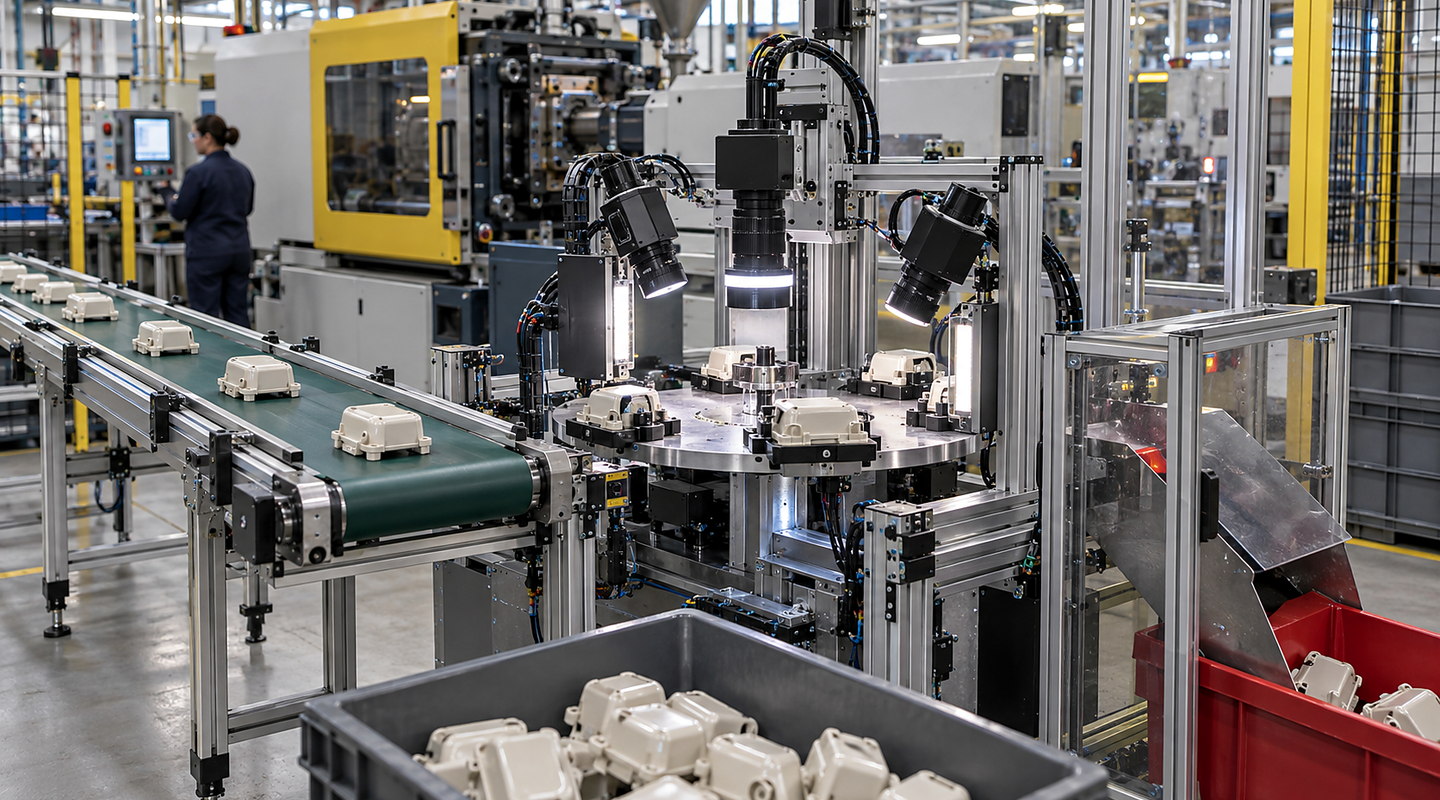
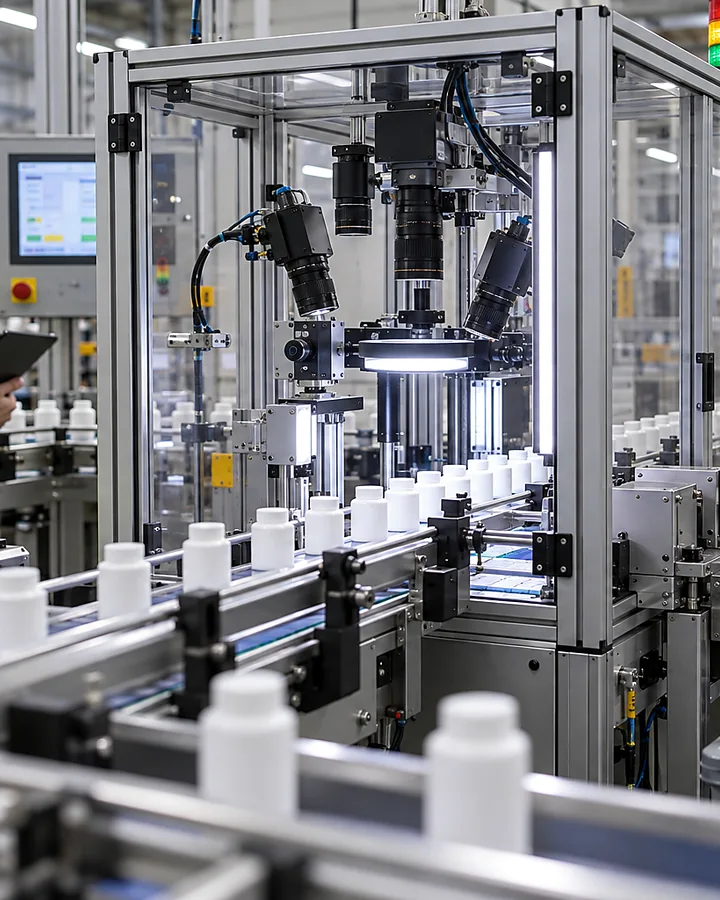
Photographs illustrate general machine-vision inspection. Colour and variant decisions must be assessed using representative products, agreed reference samples and the intended lighting and presentation.
Compare colour-inspection concepts using the same approved acceptable, unacceptable and marginal examples. Reproduce normal finish, background, product-position and production-speed variation. Judge the demonstrated decision boundary, correct part and recipe association, and recorded false accepts and false rejects.
Apply the same optical trial sequence and challenge-test checklist to each proposal. A presence check does not by itself establish the required colour decision, and non-visual properties need separate test evidence.
Compare options in the conditions where they must work — Colour and Variant Verification
Plan colour and variant verification around representative good, bad and marginal samples, line presentation, lighting, reject handling and challenge criteria. Discuss an optical feasibility trial with Oxford Vision Systems. A useful shortlist should show how every option copes with visible defect or measurement definition for colour & variant verification and recipe, reject and line-control interfaces.
Discuss your application
Ask every supplier the same questions
| Decision | What to ask | What to check |
|---|---|---|
| Visible Defect or Measurement Definition for Colour & Variant Verification | Which colour or variant decision must the line make, where is the acceptance boundary, and who approves reference samples? | Identified acceptable, unacceptable and marginal examples, with approved limits and reference/recipe-change responsibility. |
| Good, Bad and Marginal Sample Range | Does the sample set represent normal finish, batch, supplier and product variation near the decision boundary? | Traceable good, bad and marginal samples, including credible extremes and their approved expected decisions. |
| Part Presentation and Production Speed | Will the trial reproduce actual product position and the production-speed range? | Recorded presentation and timing, with each observed result associated with the correct part. |
| Optics, Lighting and Environmental Conditions | Can the intended lighting and background distinguish acceptable variation from the condition to reject? | Sample results across representative lighting, finish, background, position and environmental conditions. |
| Recipe, Reject and Line-Control Interfaces | How will correct part/recipe tracking and incorrect, uncertain or missing results be handled? | Agreed reject or line-control response, recipe-change handling, fault indication and controlled recovery. |
| False-Accept, False-Reject and Challenge Criteria | What trial method, repetitions, limits and result record will demonstrate acceptance? | Expected and observed decisions, false accepts and false rejects recorded separately, plus unresolved cases and later change controls. |
Include simpler approaches to colour and variant verification in your shortlist
| Approach | Often suitable when | Watch for |
|---|---|---|
| Colour and Variant Verification | You need a dedicated solution for a clearly defined duty, product or part range and line interface. | A camera can only assess a property made visible and repeatable by the inspection setup. |
| Purpose-Built Sensors for Simple Presence or Position Checks | The required decision is a simple presence or position check that representative trials can demonstrate. | Confirm detection across the actual presentation and product variation; do not assume that a presence check establishes the required colour or variant decision. |
| Offline Metrology or Destructive Tests where the Property Is Not Visible Inline | The required property cannot be established by the available in-line camera views. | Specify the separate test and acceptance evidence; a colour or variant result does not replace hidden, destructive, functional or statutory checks. |
Pause before choosing when…
- Only perfect or hand-selected examples of in-line inspection using colour and variant verification are available.
- No one has defined how false-accept, false-reject and challenge criteria will be evaluated.
- The normal range for visible defect or measurement definition for colour & variant verification is described only as “usually fine” but has not been bounded.
- Your operator, cleaning, maintenance or recovery access has not been considered.
- Quoted performance depends on another machine or data source that is not included.