Current condition
Keep the sample identity, approved expected decision, reference and recipe, product finish, lighting, background, position and production timing with each observed inspection result.
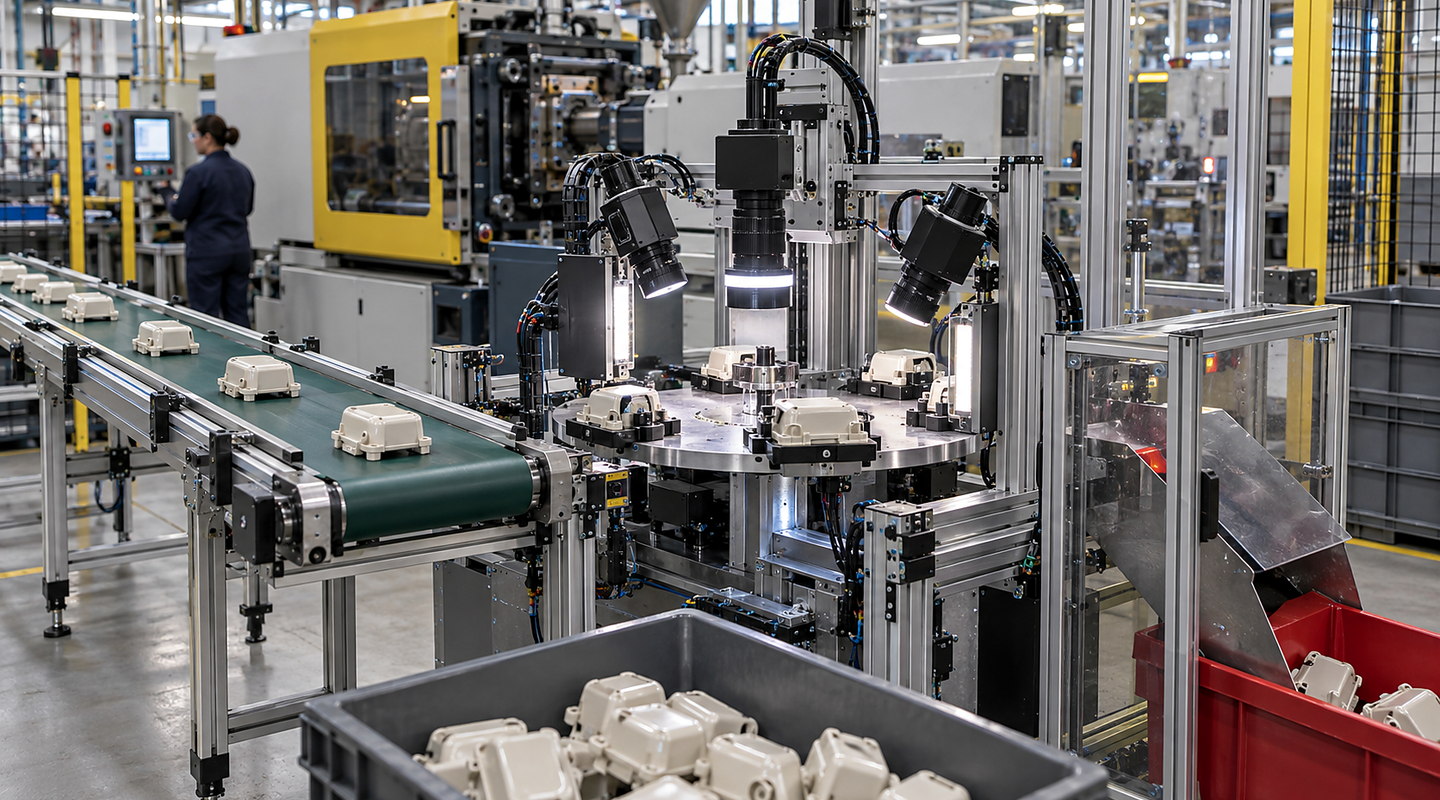
Agree colour inspection challenge samples, lighting and acceptance boundaries. Record false accepts, false rejects, part-linked responses and controlled changes.
Photographs illustrate general machine-vision inspection. Colour and variant decisions must be assessed using representative products, agreed reference samples and the intended lighting and presentation.
Agree the colour or variant decision, approved reference samples, method, repetitions and acceptance limits before testing. Challenge good, bad and marginal products with representative lighting, finish, background, position and timing. Record expected and observed decisions, false accepts and false rejects, and the part-linked response to incorrect, uncertain or missing results.
Begin with the production inspection sequence and require the same comparison evidence from each concept. Keep unresolved cases and later reference or recipe changes within the agreed approval process.
Plan colour and variant verification around representative good, bad and marginal samples, line presentation, lighting, reject handling and challenge criteria. Discuss an optical feasibility trial with Oxford Vision Systems. Use this guide to resolve false-accept, false-reject and challenge criteria before it limits the final system.
Discuss your application

Keep the sample identity, approved expected decision, reference and recipe, product finish, lighting, background, position and production timing with each observed inspection result.
Include good, bad and marginal examples, normal finish, batch, supplier and product variation, and credible extremes near the acceptance boundary. Reproduce the intended presentation, speed and environment.
Record whether the correct part receives the agreed reject or line-control response. Separate false accepts from false rejects and retain uncertain or missing results, fault indication, recovery observations and open acceptance points.
Approve the colour or variant decision and acceptance boundary using identified acceptable, unacceptable and marginal references. Record who may approve references and recipe changes.
Retain sample identities and approved classifications. Include normal finish, batch, supplier and product variation and credible extremes near the decision boundary.
Record actual position and production-speed conditions for the trial. Check that the observed result stays associated with the correct product throughout the line sequence.
Trial the intended lighting, background, finish and environmental range. Record where acceptable production variation and the reject condition cannot be reliably distinguished.
Demonstrate the agreed response to incorrect, uncertain and missing results with the correct part and recipe. Include recipe changes, fault indication and controlled recovery.
Agree method, repetitions, acceptance limits and records first. Retain expected and observed outcomes, false accepts and false rejects separately, unresolved cases and later change controls.